GLP-1 and Physiotherapy: Exercise While Taking Ozempic or Mounjaro
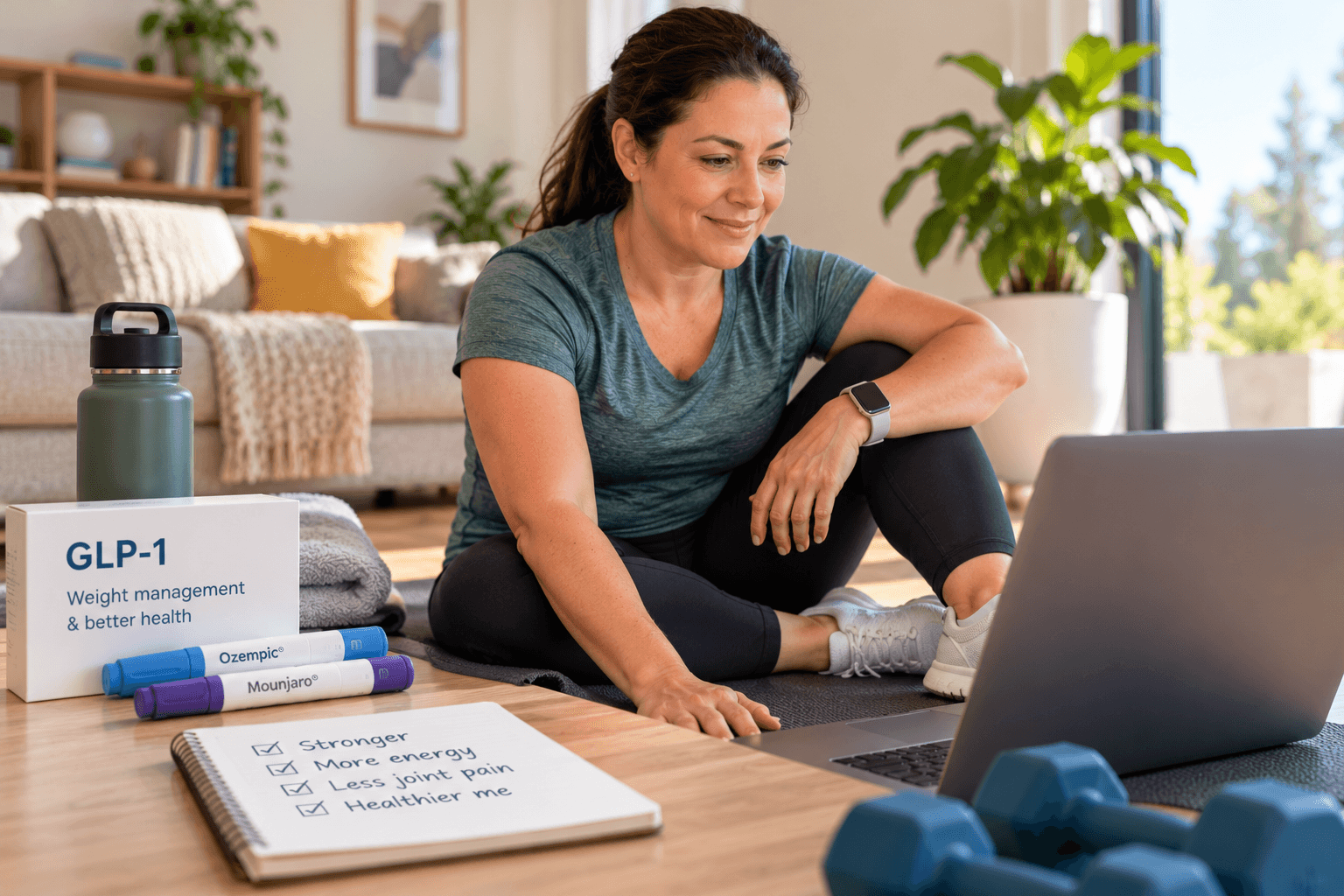
GLP-1 and Physiotherapy: How to Exercise While Taking Ozempic, Wegovy or Mounjaro
James Combes - Director & Head Physiotherapist, Telephysio Australia
GLP-1 medications such as Ozempic, Wegovy and Mounjaro have changed the way many Australians approach weight management and type 2 diabetes. These medications can support significant weight loss, but achieving a healthy outcome involves more than watching the number on the scales decrease.
Maintaining muscle strength, improving mobility and building a sustainable exercise routine are important considerations during substantial weight loss. This is where physiotherapy can play a valuable role.
Whether you are taking semaglutide, tirzepatide or another medication targeting the GLP-1 pathway, an appropriate exercise program can help you work towards better physical function while losing weight.
In this article, we examine what the research actually says about GLP-1 medications, muscle loss, strength training and physiotherapy, including the limitations of the current evidence.
What are GLP-1 medications, and why is exercise important?
GLP-1 stands for glucagon-like peptide-1, a hormone involved in regulating blood glucose and appetite. GLP-1 receptor agonists mimic some of its effects, helping regulate appetite, increase feelings of fullness and improve glucose control.
Commonly discussed medications include:
Ozempic: semaglutide, primarily marketed for type 2 diabetes in Australia.
Wegovy: semaglutide, approved for chronic weight management in eligible patients.
Mounjaro: tirzepatide, which acts on both GIP and GLP-1 receptors and has indications that include type 2 diabetes and weight management.
The approved indications, eligibility criteria and prescribing arrangements differ. These medicines are not interchangeable, and treatment should be supervised by an appropriately qualified prescriber.
How much weight can GLP-1 medications help you lose?
The STEP 1 randomised controlled trial, published in the New England Journal of Medicine in 2021, examined semaglutide 2.4 mg weekly alongside lifestyle intervention in adults with overweight or obesity without diabetes.
After 68 weeks, participants receiving semaglutide lost an average of 14.9% of their initial body weight, compared with 2.4% in the placebo group.
The SURMOUNT-1 trial, published in 2022, found that participants without diabetes receiving tirzepatide lost an average of approximately 15.0%, 19.5% and 20.9% of their initial body weight at the 5 mg, 10 mg and 15 mg doses, respectively, over 72 weeks. The placebo group lost approximately 3.1%.
These results demonstrate the substantial weight loss possible in clinical trials. They are not guaranteed outcomes for an individual, and results cannot be directly compared without considering differences in trial design, participants and treatment protocols.
The important consideration is that substantial weight loss can involve changes in both fat mass and lean body mass. Exercise and physiotherapy can help address the physical health considerations that accompany this process.
1. Can Ozempic or Mounjaro cause muscle loss?
One of the most frequently discussed concerns about GLP-1 medications is whether rapid or substantial weight loss can lead to muscle loss.
The accurate answer is that lean body mass can decrease during treatment-associated weight loss, but the extent varies between individuals. This is not unique to GLP-1 medications: lean tissue can also decrease during weight loss achieved through dietary restriction or other interventions.
What does the research show?
An exploratory analysis of body composition in the STEP 1 trial found that, among the subgroup assessed using dual-energy X-ray absorptiometry (DXA), semaglutide treatment was associated with reductions in both fat mass and lean body mass.
Fat mass decreased by approximately 19.3%, while lean body mass decreased by approximately 9.7% from baseline in the semaglutide group.
A separate systematic review and network meta-analysis published in Metabolism in 2025 also examined changes in body composition associated with GLP-1 receptor agonists and related therapies. Its pooled findings suggested that lean mass accounted for approximately one-quarter of total weight loss across the included studies.
These results require context. DXA-derived lean body mass is not a direct measurement of skeletal muscle alone; it also includes other non-fat tissues and is affected by body water. A reduction in lean mass therefore does not automatically indicate clinically significant muscle wasting or reduced strength.
Furthermore, the proportion of weight lost as lean tissue is not fixed. It depends on the individual, medication, degree of weight loss, nutritional intake, activity levels, age and other health factors.
How can physiotherapy help preserve muscle strength?
Progressive resistance training is an established strategy for improving muscle strength and helping preserve lean tissue during weight loss. It is therefore a sensible component of a comprehensive weight-management program, including for many people using GLP-1 medications.
A physiotherapist can assess your baseline physical capacity and develop an exercise program suited to your current strength, medical history, previous injuries and goals.
Depending on your needs, this may include:
Sit-to-stands and squats to improve lower-limb strength.
Step-ups and supported lunges to develop functional leg strength.
Resistance-band exercises or weight-based training.
Upper-body pushing, pulling and carrying exercises.
Progressive increases in resistance, repetitions or exercise difficulty.
The objective is to provide a suitable training stimulus while allowing enough recovery between sessions.
There is an important distinction between what we know and what remains uncertain: resistance training is well supported for improving strength and supporting lean-tissue preservation during weight loss generally. However, research has not yet established one optimal physiotherapy protocol for every GLP-1 medication or patient group.
2. What is the best exercise while taking Ozempic, Wegovy or Mounjaro?
There is no single exercise program that is appropriate for everyone taking a GLP-1 medication. The best approach depends on your starting fitness, health conditions, joint symptoms, medication-related side effects and goals.
For most adults who can exercise safely, a combination of resistance training and aerobic activity is a useful starting point.
Strength training
Strength training is particularly important because it challenges the muscles and supports the development or maintenance of strength.
Examples include:
Squats or sit-to-stands.
Step-ups.
Hip hinges and other hip-strengthening exercises.
Resistance-band rows.
Wall push-ups or other appropriate pushing exercises.
Calf raises and loaded carrying exercises.
The resistance, repetitions and frequency should be tailored to the individual. People who are new to exercise may benefit from starting with supported movements and gradually increasing the challenge.
Aerobic exercise
Aerobic exercise supports cardiovascular fitness and can improve exercise tolerance. Depending on your ability and preferences, it may include:
Walking.
Cycling.
Swimming or water-based exercise.
Low-impact aerobic exercise.
Other activities that raise your heart rate to an appropriate level.
Walking can be a useful starting point, but it should not be the only form of exercise considered if maintaining muscle strength is a priority.
How much exercise should you aim for?
The World Health Organization recommends that adults generally work towards:
150–300 minutes of moderate-intensity aerobic activity per week, or an equivalent amount of vigorous activity.
Muscle-strengthening exercise involving all major muscle groups on at least two days per week.
Reducing sedentary time and incorporating more movement into everyday life.
These are general recommendations, not compulsory starting targets for everyone taking GLP-1 medication. People who are inactive, have chronic pain or have reduced physical capacity may need to begin with shorter sessions and build up gradually.
A physiotherapist can help translate these recommendations into a practical exercise plan that accounts for your current ability and helps you progress safely.
3. Can physiotherapy help with joint pain during weight loss?
Weight loss may reduce mechanical loading through weight-bearing joints, but it does not guarantee that joint pain will resolve.
Conditions such as knee osteoarthritis, hip osteoarthritis, tendinopathy and chronic back pain can continue to limit physical activity even as body weight decreases.
This can make exercise difficult to start or maintain. Pain may reduce confidence, limit walking tolerance and make resistance training feel challenging.
Physiotherapy can help address these barriers through individualised exercise, movement advice, education and graded increases in activity.
Physiotherapy for knee and hip pain
For someone with knee osteoarthritis, treatment may include quadriceps strengthening, sit-to-stands, step-ups and progressively increasing walking tolerance.
For someone with hip pain, treatment may focus on hip strength, movement control and improving tolerance for standing, walking or other relevant activities.
For persistent back pain, the program may involve trunk and lower-limb strengthening, graded exposure to previously difficult movements and strategies to manage flare-ups.
The specific exercises depend on the diagnosis and clinical assessment. The aim is not to push through pain indiscriminately, but to establish an appropriate level of activity and progress according to the person's response.
The IDEA randomised controlled trial, published in JAMA in 2013, found that combining dietary weight loss with exercise improved several clinical outcomes in older adults with overweight or obesity and knee osteoarthritis. However, this study did not investigate GLP-1 medications. It supports the broader role of combining weight management with exercise, rather than proving a specific effect of GLP-1 treatment combined with physiotherapy.
4. Does losing weight automatically improve balance and mobility?
Not necessarily.
A reduction in body weight does not automatically mean that a person has improved strength, balance, coordination or walking capacity. These abilities depend on multiple factors, including muscle function, sensory input, cardiovascular fitness and underlying health conditions.
This is particularly relevant for older adults, people who have been inactive for a long time and those with pre-existing mobility limitations.
A physiotherapist may assess:
Lower-limb strength and control.
Sit-to-stand ability.
Walking speed and tolerance.
Balance, where clinically indicated.
Stair climbing and other everyday tasks.
The ability to perform activities relevant to work, sport or independent living.
Assessment findings help determine which areas need attention and provide a baseline against which progress can be measured.
For example, someone who struggles to climb stairs may benefit from progressive step-ups and lower-limb strengthening. Someone who feels unsteady when walking may need a more targeted balance and gait program.
The goal is to ensure that improvements in weight are accompanied by improvements in physical capacity wherever possible.
5. How do GLP-1 side effects affect exercise?
Some people experience nausea, vomiting, diarrhoea, constipation or abdominal discomfort while taking GLP-1-based medications. These symptoms can be particularly noticeable when the dose is being increased, although individual experiences vary.
If symptoms affect food intake, hydration, sleep or energy levels, exercise may become more difficult.
A physiotherapist can modify the exercise program to suit your current tolerance. This may involve reducing the duration or intensity of a session, choosing lower-impact activities or temporarily adjusting training volume.
For example, someone who feels well enough for short walks but struggles with a longer session may benefit from shorter, manageable bouts of activity.
However, physiotherapy is not a substitute for medical assessment of medication-related symptoms.
Persistent vomiting, an inability to maintain hydration, significant abdominal pain or other concerning symptoms require prompt medical advice. Severe or sudden symptoms may require urgent assessment. Do not change your medication dose without consulting your prescribing clinician.
If reduced appetite is making it difficult to meet nutritional needs, an accredited practising dietitian can help assess dietary adequacy and provide individualised advice.
6. Why nutrition matters alongside physiotherapy
Exercise is only one part of maintaining physical health during substantial weight loss.
GLP-1-based medications can reduce appetite and food intake. Some people may consequently struggle to consume sufficient energy, protein or essential nutrients.
Protein supports muscle repair and maintenance, but consuming more protein alone does not guarantee that muscle mass or strength will be preserved. Resistance exercise and adequate overall nutrition are also important.
The 2025 expert consensus statement by Mooney and colleagues recommends individualised nutrition and physical activity support during treatment with GLP-1-based therapies.
The American Diabetes Association's 2025 standards of care also emphasise adequate nutritional intake, attention to protein sufficiency and muscle-strengthening activity during weight reduction with obesity medications.
These recommendations support a multidisciplinary approach. A dietitian can assess nutritional intake and advise on appropriate dietary strategies, while a physiotherapist or accredited exercise physiologist can help develop an appropriate exercise program.
Individual requirements differ, particularly for older adults and people with diabetes, kidney disease or other conditions that may influence nutritional or exercise recommendations.
7. What happens when you stop taking a GLP-1 medication?
GLP-1 medications are often part of longer-term weight management, and weight regain after treatment cessation is an important consideration.
In the STEP 1 extension study, published in Diabetes, Obesity and Metabolism in 2022, researchers followed a subgroup of participants after semaglutide treatment and the associated lifestyle intervention were discontinued.
Participants regained, on average, approximately two-thirds of their previous weight loss over the following year.
This finding does not mean that everyone will regain the same amount of weight. The results relate to a specific trial population and treatment protocol, and individual outcomes vary.
Nor does the study demonstrate that exercise or physiotherapy can prevent weight regain after stopping medication.
However, establishing sustainable habits during treatment may help people continue working towards strength, mobility, cardiovascular fitness and physical independence over the longer term.
A physiotherapist can help develop an exercise routine that fits into everyday life, monitor changes in physical capacity and adapt the program as your circumstances change.
Decisions about starting, changing or stopping medication should always be discussed with the prescribing clinician.
8. Can you access physiotherapy online while taking GLP-1 medications?
Yes. For many people, telehealth physiotherapy can provide a practical way to access exercise assessment and rehabilitation without regularly travelling to a clinic.
At Telephysio Australia, our online physiotherapy consultations allow suitable patients to discuss their symptoms, goals and medical history with an AHPRA-registered physiotherapist via video.
Depending on the person's needs, a consultation may involve:
Reviewing current activity levels, previous injuries and exercise experience.
Observing selected movements and functional tasks.
Identifying musculoskeletal problems that may limit exercise.
Developing an individualised home exercise program.
Providing education on exercise progression and symptom management.
Reviewing progress and modifying exercises at follow-up appointments.
Telehealth is not appropriate for every clinical situation. Some conditions require hands-on assessment, investigations or in-person care. Your physiotherapist will determine whether a remote consultation is suitable and recommend further assessment where needed.
For people living in rural and regional Australia, online physiotherapy can reduce travel barriers and provide access to ongoing support from home.
How Telephysio Australia can help
At Telephysio Australia, we provide online physiotherapy across Australia, with a focus on accessible, evidence-informed care.
If you are taking Ozempic, Wegovy, Mounjaro or another weight-management medication and want to improve your strength, mobility or exercise confidence, physiotherapy may be one useful component of your broader healthcare plan.
Our physiotherapists can help assess your physical capacity, identify musculoskeletal barriers and develop an exercise program suited to your goals. Where appropriate, we can also work alongside your GP, prescribing clinician and other allied health professionals.
The aim is not simply to lose weight. It is to support the strength, mobility and physical capacity you need to live well.
Frequently asked questions about GLP-1 medications and physiotherapy
Should I exercise while taking Ozempic?
For most people who can exercise safely, regular physical activity is an important component of overall health and weight management. A combination of aerobic activity and resistance training is generally recommended. Your program should be tailored to your medical history, current fitness, symptoms and prescribing clinician's advice.
Does Mounjaro cause muscle loss?
Weight loss during tirzepatide treatment can involve reductions in lean body mass as well as fat mass. However, lean body mass is not the same as skeletal muscle, and changes in body composition do not automatically indicate clinically significant muscle weakness. Individual outcomes vary, and resistance exercise and adequate nutrition are important considerations.
Can physiotherapy prevent muscle loss while taking GLP-1 medications?
Physiotherapy can support a structured resistance-training program designed to improve or maintain strength and physical function. Resistance training is supported by broader weight-loss research, but definitive evidence that physiotherapy prevents all GLP-1-associated muscle loss is not yet available.
What exercises are best while taking Wegovy?
There is no single best exercise for everyone. Depending on your ability and health status, an appropriate program may combine resistance exercises, walking or other aerobic activities, and functional training. A physiotherapist can help select exercises and progress them according to your goals and tolerance.
How often should I do strength training while losing weight?
General physical activity guidelines recommend muscle-strengthening activities involving all major muscle groups on at least two days per week. The appropriate frequency and intensity depend on your training experience, recovery, health conditions and exercise tolerance.
Can I see a physiotherapist online in Australia?
Yes. Telehealth physiotherapy is suitable for many musculoskeletal conditions and can support exercise assessment, education, rehabilitation and follow-up. Suitability depends on the individual clinical situation, and some conditions require in-person assessment.
Will exercise stop me regaining weight if I stop Ozempic?
Exercise supports health, strength and physical function, but it cannot guarantee that weight will not be regained after medication cessation. Weight management is multifactorial, and decisions about medication should be made with your prescribing clinician.
Final thoughts: GLP-1 treatment should support more than weight loss
GLP-1 medications can help eligible people achieve substantial weight loss, but long-term health involves more than body weight alone.
Maintaining strength, improving mobility, managing joint pain and building a sustainable exercise routine are important considerations during treatment.
Physiotherapy can help translate general exercise recommendations into an individualised plan, particularly for people with musculoskeletal pain, reduced mobility, previous injuries or uncertainty about how to exercise safely.
The evidence supports resistance training, aerobic activity and appropriate nutrition as components of comprehensive weight management. The most effective ways to integrate these strategies with specific GLP-1 medications continue to be investigated.
If you are taking a GLP-1 medication and want support with strength, mobility or returning to exercise, Telephysio Australia can help you explore whether online physiotherapy is appropriate for your needs.
Accessible, affordable physiotherapy — wherever you are in Australia.
References
Wilding JPH, Batterham RL, Calanna S, et al. Once-Weekly Semaglutide in Adults with Overweight or Obesity. New England Journal of Medicine. 2021;384:989–1002. https://doi.org/10.1056/NEJMoa2032183
Jastreboff AM, Aronne LJ, Ahmad NN, et al. Tirzepatide Once Weekly for the Treatment of Obesity. New England Journal of Medicine. 2022;387:205–216. https://doi.org/10.1056/NEJMoa2206038
Wilding JPH, Batterham RL, Davies M, et al. Impact of Semaglutide on Body Composition in Adults With Overweight or Obesity: Exploratory Analysis of the STEP 1 Study. Journal of the Endocrine Society. 2021;5(Suppl 1)–A17. https://doi.org/10.1210/jendso/bvab048.030
Zhang X, et al. Effect of glucagon-like peptide-1 receptor agonists and co-agonists on body composition: Systematic review and network meta-analysis. Metabolism. 2025;164:156113. https://doi.org/10.1016/j.metabol.2024.156113
Messier SP, Mihalko SL, Legault C, et al. Effects of Intensive Diet and Exercise on Knee Joint Loads, Inflammation, and Clinical Outcomes Among Overweight and Obese Adults With Knee Osteoarthritis: The IDEA Randomized Clinical Trial. JAMA. 2013;310(12):1263–1273. https://doi.org/10.1001/jama.2013.277669
World Health Organization. WHO Guidelines on Physical Activity and Sedentary Behaviour. Geneva: WHO; 2020. https://www.who.int/publications/i/item/9789240015128
Mooney E, et al. Nutritional and lifestyle supportive care recommendations for management of obesity with GLP-1-based therapies: An expert consensus statement using a modified Delphi approach. Obesity Pillars. 2025;14:100228. https://doi.org/10.1016/j.obpill.2025.100228
American Diabetes Association Professional Practice Committee. Pharmacologic Treatment of Obesity in Adults: Standards of Care in Overweight and Obesity. Diabetes, Obesity, and Cardiometabolic CARE. 2025. https://doi.org/10.2337/doci25-0008
Wilding JPH, Batterham RL, Davies M, et al. Weight regain and cardiometabolic effects after withdrawal of semaglutide: The STEP 1 trial extension. Diabetes, Obesity and Metabolism. 2022;24(8):1553–1564. https://doi.org/10.1111/dom.14725
Medical disclaimer: This article is for general educational purposes and does not replace individual medical advice. Medication suitability, adverse effects and treatment changes should be discussed with the prescribing clinician.